

Kuala Lumpur/New Delhi: India and Malaysia on Sunday unveiled a packed slate of agreements and institutional initiatives following Prime Minister Narendra Modi’s official visit, underscoring an effort to take the bilateral relationship beyond traditional trade into technology cooperation, security, skills and social sector linkages.
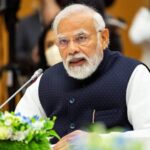
At the centre of the outcomes was a clutch of MoUs, Exchanges of Notes (EoNs) and framework agreements signed between the two governments. These include cooperation in semiconductors, disaster management, combating and preventing corruption, health and medicine, vocational education and training (TVET), and security cooperation between the two national security councils.
The two sides also extended their UN peacekeeping cooperation framework and signed an agreement on audio-visual co-production, reflecting a parallel push to strengthen cultural and people-to-people ties.
A notable addition is the Framework Agreement on the International Big Cats Alliance (IBCA), signalling convergence on environmental and conservation priorities. In the social security space, a Memorandum of Cooperation between India’s ESIC and Malaysia’s PERKESO aims to streamline social security programs for Indian citizens insured in Malaysia—an outcome with direct implications for the Indian diaspora working there.
On the institutional front, the two countries announced the establishment of an Indian Consulate General in Malaysia, a dedicated Thiruvalluvar Centre at Universiti Malaya, and the institution of Thiruvalluvar Scholarships for Malaysian nationals.
In a move with clear fintech and trade facilitation overtones, NPCI International Payments Ltd (NIPL) and Malaysia’s PayNet agreed on cross-border payments, while the University of Cyberjaya and the Institute of Training and Research in Ayurveda (ITRA) signed an MoU on academic collaboration.
Business-to-business engagement also featured, with the presentation of the report of the 10th Malaysia–India CEO Forum, indicating that corporate stakeholders are being roped into shaping the next phase of economic cooperation.
For policymakers, the breadth of the outcomes is as important as the headlines: semiconductors and security point to strategic trust, TVET and health to workforce and social resilience, and payments and consular expansion to smoother commercial and people flows. Together, the package suggests New Delhi and Kuala Lumpur are architecting a more comprehensive partnership—one that couples trade with technology, security and skills as both economies navigate a more fragmented global landscape