

Kuala Lumpur/New Delhi: Prime Minister Narendra Modi on Saturday held meetings with four leading Malaysian industry leaders, using the platform to showcase India’s reform momentum and invite deeper participation in the country’s growth cycle across sectors ranging from infrastructure and renewable energy to digital technology, semiconductors, AI and healthcare.
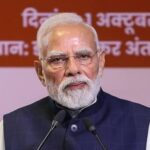
The Prime Minister met PETRONAS President and Group CEO Tan Sri Tengku Muhammad Taufik, Berjaya Corporation founder Tan Sri Dato’ Seri Vincent Tan Chee Yioun, Khazanah Nasional Managing Director Dato’ Amirul Feisal Wan Zahir, and Phison Electronics founder Dato Pua Khein Seng. He welcomed the expanding business-to-business engagement between the two countries and pointed to recent policy and regulatory reforms aimed at improving ease of doing business and providing a stable, predictable operating environment for investors.
Modi encouraged Malaysian companies to explore opportunities in priority areas, arguing that India’s scale, demand outlook and policy stability make it a compelling destination for long-term capital. He also cited the 10th India–Malaysia CEO Forum held in Kuala Lumpur on February 7, expressing confidence that its deliberations would translate into stronger trade and investment flows between the two economies.
The visiting executives, for their part, acknowledged the reforms undertaken by the Indian government under the “Viksit Bharat” vision and expressed confidence in India’s growth trajectory. They conveyed interest in expanding their investment footprint in India, including through portfolio additions and joint ventures with Indian partners.
For New Delhi, the outreach fits into a broader strategy of leveraging high-level diplomacy to crowd in foreign capital, particularly in technology-intensive and infrastructure-heavy sectors that are central to India’s medium-term growth plans. With Malaysia home to major energy, sovereign investment and semiconductor-linked players, officials see scope for the relationship to move beyond trade into deeper, project-led partnerships over the coming years