

Synopsis: A The United States has announced tariffs on imports from eight NATO member countries — Denmark, Norway, Sweden, France, Germany, the U.K., the Netherlands and Finland — tying economic penalties to their opposition to U.S. demands for Greenland. Effective February 1, 2026, the tariffs begin at 10% and are set to rise to 25% by June if no agreement is reached.
Washington / Brussels / Copenhagen: In a dramatic escalation of geopolitical tensions with Europe, U.S. President Donald Trump announced trade penalties on eight NATO allies tied to their resistance against American efforts to gain control of Greenland — a semi‑autonomous Danish territory considered strategically vital in the Arctic.
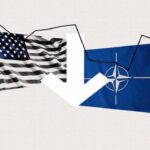
In a Truth Social post on January 17, Trump declared that imports from Denmark, Norway, Sweden, France, Germany, the United Kingdom, the Netherlands and Finland will face a 10% tariff starting February 1, 2026. The duties are slated to rise to 25% by June 1 unless the United States achieves what Trump described as the ”Complete and Total purchase of Greenland.”
The move — linking trade sanctions directly to a geopolitical objective — has unsettled European capitals and raised concerns across diplomatic and economic corridors about the future of transatlantic cooperation. Trump framed the tariffs as a response to European opposition to U.S. ambitions in the Arctic, arguing that control over Greenland is critical to American national security and global stability.
Greenland — rich in mineral resources and strategically positioned between North America and Europe — has long been of interest to U.S. policymakers. Trump has repeatedly asserted that the United States must secure the island to prevent rival powers such as China and Russia from gaining influence. European allies, however, have reaffirmed Danish sovereignty and rejected any sale or transfer of territory.
The tariff threat marks an unprecedented step in U.S. policy, tying punitive trade measures to a territorial dispute with nations that are formal defense partners through NATO. Analysts warn such economic weaponization risks undermining alliance unity at a time of mounting global security challenges.
European leaders reacted with unified condemnation. Officials in Paris, Berlin and London denounced the tariff plan as coercive “economic blackmail” incompatible with the spirit of alliance cooperation. French President Emmanuel Macron and other EU officials stressed that security concerns in the Arctic should be managed within NATO frameworks, without jeopardizing trade relations or diplomatic trust.
Denmark, which oversees Greenland’s foreign affairs, has maintained that recent allied military deployments in the Arctic are defensive and aimed at bolstering regional security. Copenhagen has called for continued dialogue and multilateral solutions to address security concerns.
The European Union has signaled that continued tariff escalation could jeopardize broader trade negotiations with Washington, potentially derailing cooperation on commercial and strategic fronts. Brussels is preparing an emergency diplomatic response, with senior EU envoys set to coordinate a unified approach.
Global markets reacted to the heightened uncertainty, with exporters in the targeted nations facing potential cost pressures. Economists warn that extended tariffs could disrupt supply chains and hurt economic growth in Europe, while also complicating U.S. trade relations with key partners.
The dispute arrives amid an already complex geopolitical landscape, with NATO grappling with resource gaps, defense realignments and renewed focus on deterrence in Eastern Europe. Critics of the U.S. move argue that economic conflict among allies could distract from collective efforts to address Russia’s ongoing aggression in Ukraine and other shared security priorities.