

New Delhi: In a significant shift in economic relations, the United States and India have struck a new trade agreement, with Washington agreeing to reduce tariffs on Indian goods in exchange for New Delhi scaling back purchases of Russian oil and expanding purchases of American products.
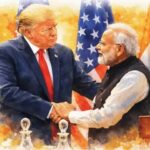
U.S. President Donald Trump said in a Truth Social post that after a phone call with Prime Minister Narendra Modi, both sides agreed to a package that will lower U.S. tariffs on Indian exports from punitive levels to around 18%, from as high as 50% previously imposed.
In return, India has agreed to curb its purchases of Russian crude and to increase imports of U.S. oil and other commodities — potentially including energy, technology and agricultural products.
The White House confirmed the removal of the additional 25% tariff penalty tied to India’s Russian oil purchases, saying the move is part of an effort to reset the bilateral trade relationship and stimulate higher two-way trade flows. Modi — speaking on X (formerly Twitter) — said the agreement would open “immense opportunities for mutually beneficial cooperation” between the world’s two largest democracies.
Financial markets responded positively to the announcement, with U.S. equity benchmarks inching higher on expectations that tariff relief could spur Indian exports to the United States.
Trade strategists noted that the pact could counterbalance pressures from global supply chain disruptions and geopolitical tensions, especially given India’s recent free-trade agreement with the European Union.
Diplomatically, the deal marks a turning point after months of strained ties over tariff disputes. The U.S. had slapped steep duties on Indian products — a move that triggered concern in New Delhi about protectionist trends. The new agreement is billed as a step toward normalising trade policy and reinforcing strategic alignment, especially amid shifting global alliances and tensions related to Russia’s invasion of Ukraine.
The pact’s implementation could face hurdles. India’s sourcing priorities, particularly for energy, may not shift significantly overnight due to existing contracts and pricing considerations. U.S. exporters, especially in oil and technology sectors, will be watching the operational details closely to see if the reduced tariffs translate into tangible market access gains.
Moreover, the deal could have implications for India’s broader trade strategy, including ongoing negotiations with the EU and other partners, as New Delhi seeks to balance economic growth with geopolitical autonomy.