

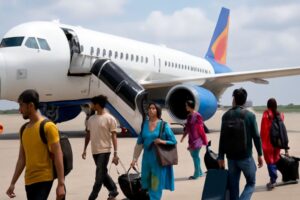
India’s outbound business travel sector is witnessing a powerful comeback, underscoring the return of corporate mobility and global networking. With exhibitions, trade summits, and business conferences resuming at full scale, companies are once again investing in travel to strengthen partnerships and explore new markets.
According to the Global Business Travel Association (GBTA), India’s business travel spending is expected to reach $43 billion by the end of 2025 — a 19% rise over the previous year. This makes India one of the fastest-growing business travel markets globally.
Airlines and hotel operators are benefitting from this resurgence. Air India, Vistara, and Indigo have all reported strong corporate travel bookings, particularly on routes to Southeast Asia, the Middle East, and Europe. Business-class load factors have reached 85%, matching or exceeding pre-2020 levels.
The hospitality industry, too, is experiencing an upturn. Major hotel chains like Marriott, Taj, and Hyatt report that corporate event bookings and long-stay business reservations are driving occupancy rates above 80%.
Technology and manufacturing firms are leading this revival. Many are sending teams abroad for supplier audits, trade shows, and expansion deals. The upcoming Industrial Front Business Events App, set to launch this month, also highlights this momentum — offering companies a platform to manage event bookings and ticketing seamlessly.
Industry observers note that hybrid and virtual meetings remain popular for cost control, but in-person networking is regaining importance. “Trust and relationships still form the core of B2B business,” said Rajeev Kapoor, an event industry consultant. “Face-to-face meetings are back, and companies are willing to invest again.”
Outbound leisure travel, often linked with business trips, is also rising. The top destinations for Indian professionals this season include Dubai, Singapore, and London — regions where trade opportunities and travel convenience align.
However, costs remain a challenge. Airfares and hotel tariffs have increased by 20–25% since 2023 due to fuel prices and supply limitations. Many companies are now integrating travel tech solutions to manage costs more effectively.
The rebound of business travel is more than a post-pandemic correction; it’s a reflection of expanding global ambitions among Indian firms. As India strengthens its role in manufacturing, IT, and trade, business mobility is set to remain a key growth enabler through 2026.